Back exercise guides

Back Exercises: Understand Movement and Training Technique

Explore the existing back-exercise guides and learn how to interpret two different tasks: upper-back and shoulder movement, and a hip hinge with trunk control.

Evidence-informedMovement-focusedTraining context matters

Quick orientation

“Back exercise” describes a region, not one movement pattern

The back includes muscles involved in movements of the upper arm and shoulder blade, such as the latissimus dorsi, trapezius, and rhomboids. Other muscles, including the erector spinae group, help extend and control the vertebral column.12

That distinction matters when reading the available guides: a reverse fly and a good morning place different demands on the body. Neither should be treated as a complete back-training program simply because it appears in this category.

Short answer

Start by identifying the movement task: arm/shoulder-girdle motion or a hip hinge with trunk involvement. Then consider the setup, range, external load, and your training goal. A movement description does not by itself demonstrate superior strength gains, safety, or injury prevention.34

Three learning paths

Choose what you want to understand

Use these learning questions to navigate the guide collection rather than looking for one universally best “back exercise.”

1. Shoulder and upper back

How does a reverse fly work?

Read how the arms and shoulder girdle move, and interpret the muscles involved without treating one structure as the only contributor.1

2. Hip hinge and trunk

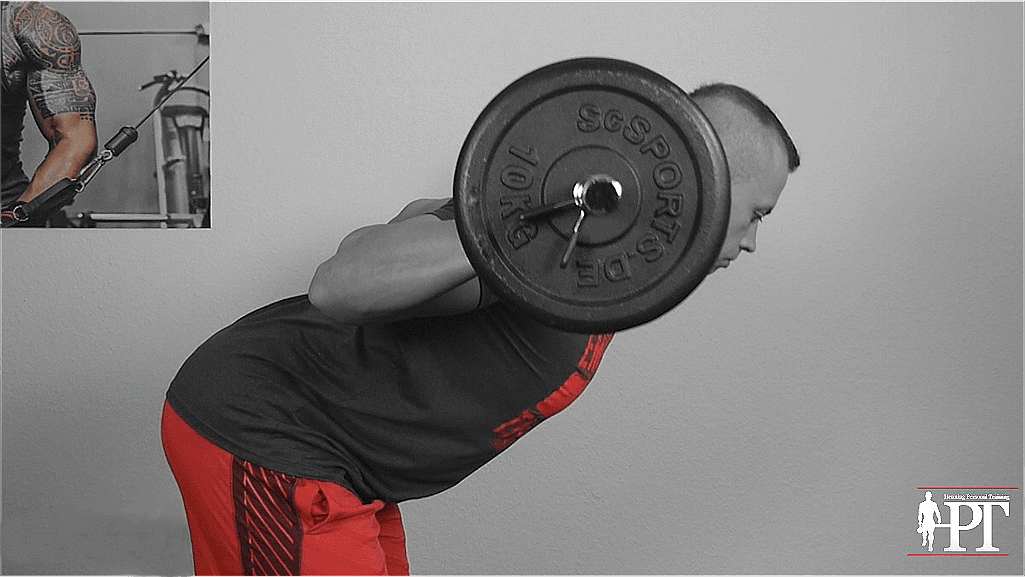
What happens in a good morning?

Examine the hip-hinge setup and the involvement of the trunk. In a small study of trained men, knee flexion increased with load, while measured hip and lumbar flexion showed no remarkable between-load changes.3

3. Programming

How does an exercise fit a plan?

Evaluate the intended outcome, available equipment, resistance, practice, and progression within the overall training program.4

Useful distinctions

Anatomy and exercise names are not interchangeable

Upper-back and shoulder motion

Muscles that move the humerus or position the scapula can contribute to exercises involving arm motion. The visible task and body position determine what needs to be described.1

Trunk and hip-hinge demands

A good morning combines hip movement with demands on the trunk. Small kinematic and muscle-activity studies describe those demands but cannot establish a universally safe form or long-term training superiority.23

Current back exercise guides

Browse the back-exercises archive

The cards below load the currently available Back Exercises posts automatically. Choose a guide that matches the movement or training question you want to explore.

Practical application

Four questions to use with any back-exercise guide

These questions are an educational reading framework, not a validated clinical test or a one-size-fits-all program.

Step 1

Name the movement

Is the task primarily arm/shoulder motion, a hip hinge, or another movement? Begin with the task rather than the muscle label.

Step 2

Inspect the setup

Check the body position, contact points, equipment, intended range, and direction of external resistance.

Step 3

Interpret the demands

Use anatomy and the guide to understand possible muscle contributions. Movement or electromyography data alone cannot predict an individual's long-term adaptation.3

Step 4

Connect it to training

Match exercise choice, resistance, and progression to the goal, experience, and broader program.4

Educational framework: The four steps above help organize a guide review. They are not a validated injury-screening tool, rehabilitation protocol, or individualized exercise prescription.

Evidence boundaries

What a back-exercise guide can—and cannot—tell you

It can help you

  • identify the movement and intended setup;
  • connect the task to relevant shoulder, back, and trunk anatomy;12
  • understand differences between arm movement and a hip hinge;
  • ask more useful questions when choosing an exercise.

It cannot establish alone

  • one universally best exercise for back muscle growth;
  • that one technique guarantees freedom from injury;
  • your individual pain diagnosis or rehabilitation needs;
  • the right weekly dose without considering your goals and capacity.

Explore connected topics

Continue with the established FSE hubs for anatomy, related exercise guides, and practical training decisions.

Exercise guides

Find other movement explanations

Browse the wider exercise library to compare more training tasks.

Anatomy

Understand the moving structures

Connect muscle groups, joints, and movement descriptions.

Shoulder guides

Explore the shoulder-girdle context

See how exercises involving the upper arm and scapula fit another guide collection.

Programming

Turn single exercises into a plan

Consider how resistance, practice, progression, and recovery fit together.

Optional technique support

Review your exercise setup with a free checklist

The Exercise Technique Checklist can help organize a review of the starting position, movement path, range of motion, and exercise control. It is not a diagnostic or injury-prevention guarantee.

Optional support; the back-exercise guides remain freely readable.

Portrait of Olaf Henning

About the educator

Created by Olaf Henning

Olaf Henning, M.Sc. Clinical Exercise Science, M.A. Sports Science, B.Sc. Sport and Performance, explains exercise technique in the context of anatomy, training evidence, and individual differences.

About Olaf

Safety and scope

This archive offers general educational information about exercise movements. It cannot assess the cause of back pain, neurological symptoms, injury, medical readiness, or the suitability of a loaded hip hinge for an individual. If you have new or worsening pain, progressive weakness, numbness, or other concerning symptoms, seek appropriate professional assessment rather than relying on an exercise guide.

Frequently asked questions

Back exercise FAQ

Do all back exercises train the same muscles?

No. The relevant muscles depend on the task. The latissimus dorsi helps move the upper arm, the trapezius and rhomboids help position the scapula, and the erector spinae contributes to extension and control of the vertebral column.12

Why are reverse flies and good mornings in the same category?

Both involve structures in the back region, but they are different movement tasks. A reverse fly emphasizes arm and shoulder-girdle movement; a good morning is a hip-hinge exercise with trunk demands. Compare the separate exercise guides rather than using the names interchangeably.13

Is a good morning automatically the best lower-back exercise?

No. Small studies describe its joint movements and muscle activity, but those measurements do not establish that it is the best choice for strength, hypertrophy, pain, or injury prevention. Your goals and the overall training plan matter.34

How should I choose a back exercise?

Start with the movement you want to practice, the resistance you can manage, and your broader training goal. Evidence on resistance training in healthy adults supports progressive but flexible programming rather than one universal exercise or dose.4

Can back exercises diagnose or treat back pain?

No. These guides cannot identify the cause of symptoms or replace individual clinical assessment. Exercise advice for a health condition requires an appropriate personal context.

Evidence base

References

  1. Betts JG, Young KA, Wise JA, et al. Muscles of the Pectoral Girdle and Upper Limbs. In: Anatomy and Physiology 2e. OpenStax; 2022. OpenStax chapter.
  2. Betts JG, Young KA, Wise JA, et al. Axial Muscles of the Head, Neck, and Back. In: Anatomy and Physiology 2e. OpenStax; 2022. OpenStax chapter.
  3. Vigotsky AD, Harper EN, Ryan DR, Contreras B. Effects of load on good morning kinematics and EMG activity. PeerJ. 2015;3:e708. doi:10.7717/peerj.708. Study of 15 trained men; kinematics and muscle activity, not long-term training outcomes.
  4. Currier BS, D'Souza AC, Fiatarone Singh MA, et al. American College of Sports Medicine Position Stand. Resistance Training Prescription for Muscle Function, Hypertrophy, and Physical Performance in Healthy Adults: An Overview of Reviews. Medicine & Science in Sports & Exercise. 2026;58(4):851–872. doi:10.1249/MSS.0000000000003897. Recommendations for healthy adults; not an exercise-specific pain or safety trial.
Scroll to Top