Nutrition Basics
Learn how energy, macronutrients, micronutrients, fiber, hydration, and dietary reference values fit into a broader nutrition framework.
Energy
Nutrients
Fiber
Build a clearer understanding of energy, nutrients, food choices, and supplements—without turning nutrition into a rigid set of universal rules.
Nutrition guidance is meant to help people meet nutrient needs and support health, but the details of a balanced diet can vary with age, activity, culture, available foods, preferences, and other individual circumstances.1,2
Start with the foundations, understand foods in context, and treat supplements as a separate decision that requires evidence, safety, and relevance—not as a shortcut around the basics.

Use the broad foundation first, then move into food-specific questions or supplement decisions. This helps keep individual details connected to the wider context.
Learn how energy, macronutrients, micronutrients, fiber, hydration, and dietary reference values fit into a broader nutrition framework.
Explore individual foods, food components, and ingredients without reducing an entire diet to one isolated nutrient or marketing claim.
Review supplement questions through effectiveness, safety, quality, dose, interactions, and whether the product addresses a real need.4
The World Health Organization describes adequacy, balance, moderation, and diversity as core principles that can apply across different forms of healthy eating.2
Food intake should provide enough energy and essential nutrients for the person and situation.
Energy intake, energy use, and the major nutrient sources need to be considered together rather than in isolation.
Some foods or nutrients may need limits, but context matters more than labeling every food as simply good or bad.
A varied pattern can make it easier to cover nutrient needs across foods and food groups.
Nutrient reference values are designed for different ages, sexes, and life stages, which is one reason universal intake claims need careful interpretation.3
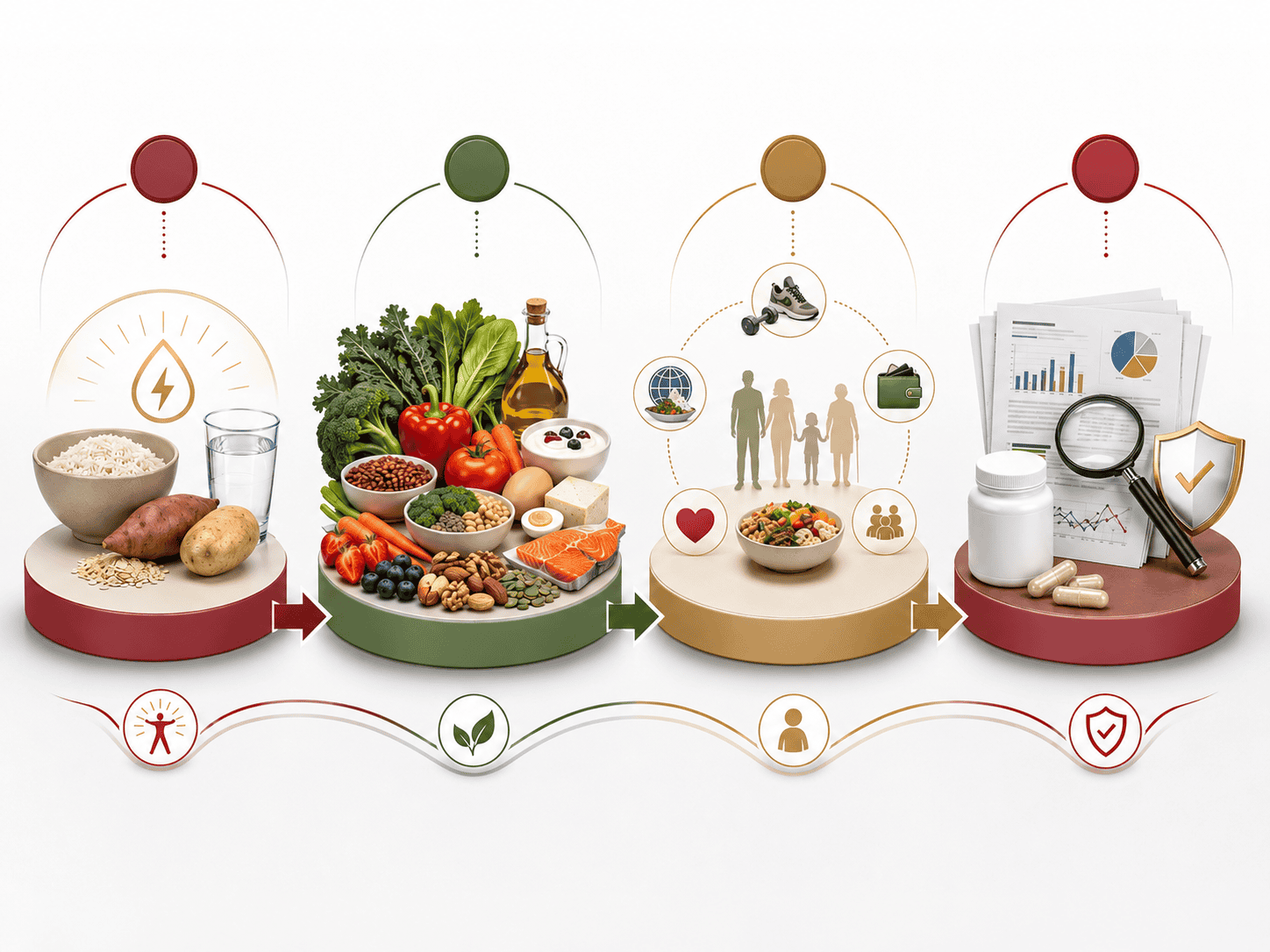
Are you trying to understand a nutrient, a food, a meal pattern, a supplement, or a performance-related claim?
Check the overall dietary pattern before drawing conclusions from one isolated product or ingredient.
Consider activity, goals, preferences, culture, budget, health conditions, medications, and practical constraints.
Separate established guidance from emerging research, marketing claims, personal anecdotes, and unsupported certainty.
These legacy articles are useful entry points, but each will be reviewed and upgraded to the new Fitness Simply Explained editorial and citation standard over time.
Learn what dietary fiber is, how different forms are categorized, and why food sources and physiological context matter.
Explore caffeine, fluid balance, individual variability, and why a simple yes-or-no claim may miss relevant context.
The goal is to explain concepts, evidence, uncertainty, and practical relevance without promising a perfect diet or turning general information into individualized treatment.
Nutrition includes the foods and drinks that provide energy and nutrients, together with the patterns, quantities, timing, context, and individual factors that influence how those choices fit a person’s needs.
No. Healthy dietary patterns can take different forms, and the exact composition can vary with individual characteristics, activity, culture, available foods, and dietary customs.2
Start with nutrition basics. Learn the roles of energy, macronutrients, micronutrients, fiber, and dietary reference values before focusing on isolated products or supplements.
Usually, supplement decisions should be made after clarifying the underlying need. Effectiveness, safety, product quality, dose, and medicine interactions all matter.4
No. This hub provides general education. It does not assess your medical history, medication use, laboratory values, dietary intake, or individual treatment needs.
On smaller screens, you can scroll this table horizontally.
| Claim / Content | Source(s) |
|---|---|
| Nutrition guidance aims to help meet nutrient needs and support health. | Reference 1 |
| Healthy diets can vary with individual characteristics, activity, culture, available foods, and dietary customs. | Reference 2 |
| Adequacy, balance, moderation, and diversity are useful organizing principles for healthy diets. | Reference 2 |
| Nutrient reference values differ across ages, sexes, and life stages. | Reference 3 |
| Supplement evaluation should consider effectiveness, safety, quality, recommended amounts, and medicine interactions. | Reference 4 |
Continue with nutrition basics, or use the free Exercise Technique Checklist when your next question is about strength-training execution rather than food.