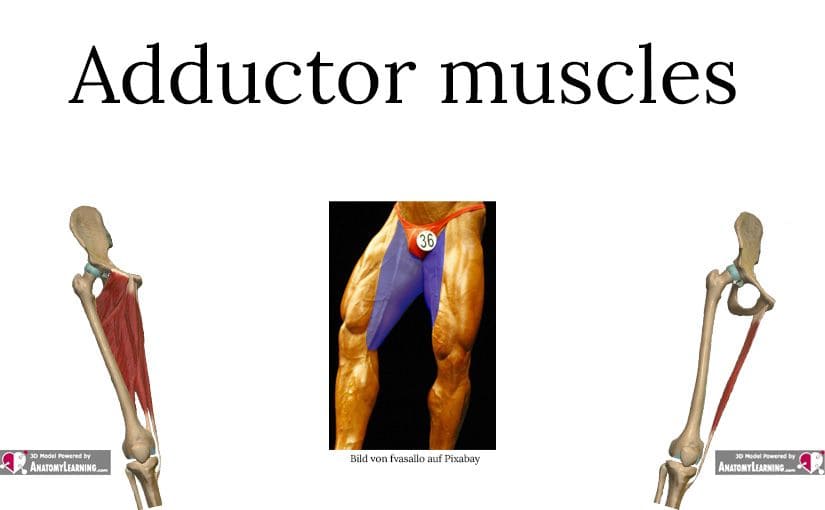
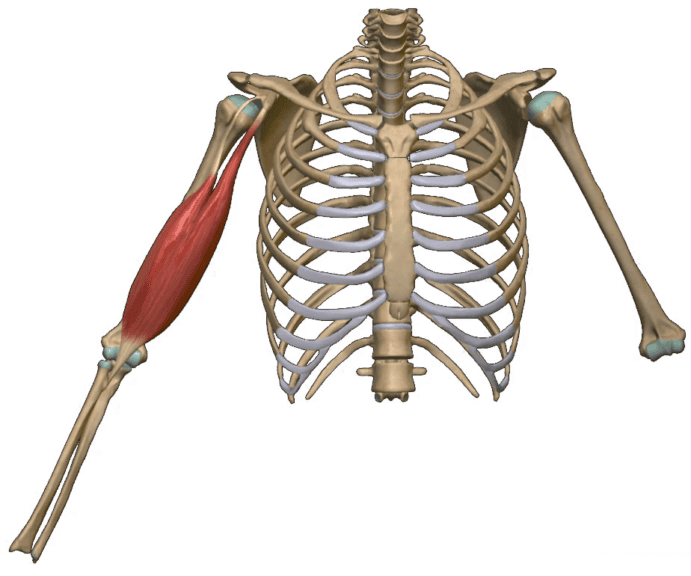
Where is the structure?
Start with the muscle’s location, attachments, and the joint or joints it crosses. This gives you a map before you interpret movement.
Muscle anatomy hub
Learn where major muscles are, how their structure relates to movement, and how to use anatomy as context for exercise—not as a shortcut to one “best” technique or program.
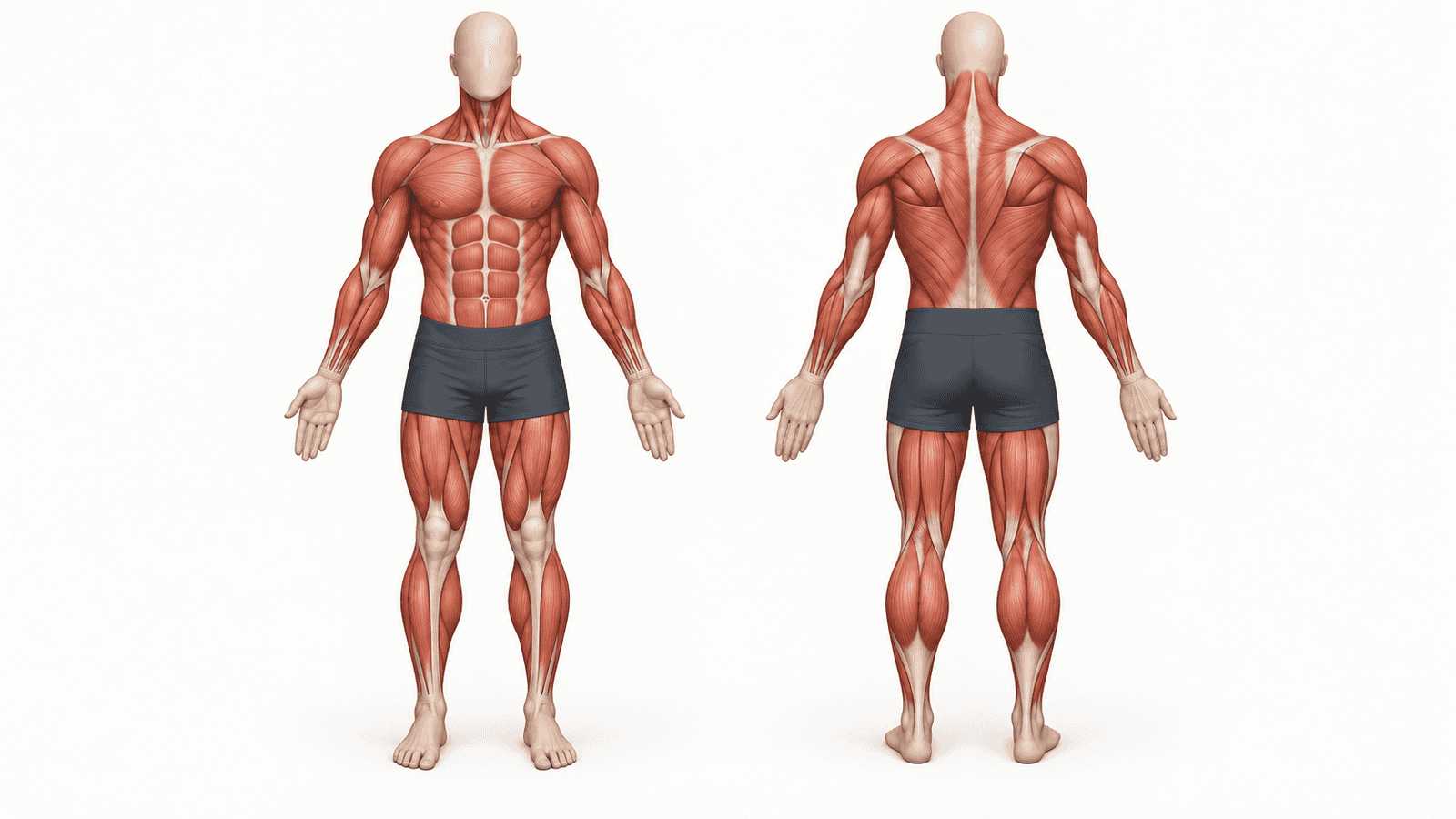
Quick orientation
Skeletal muscles transmit force through tendons and work with bones, joints, and other muscles to produce or control movement.1 A muscle name or single listed action is therefore a useful starting point—not a complete explanation of an exercise.
Three learning paths
The current guide collection focuses on specific muscles and muscle groups. Use these paths to read each guide with the right question in mind.
Start with the muscle’s location, attachments, and the joint or joints it crosses. This gives you a map before you interpret movement.
Review the actions and roles a muscle may perform. Keep in mind that muscles commonly act with agonists, antagonists, and synergists rather than in isolation.1
Connect the anatomy to the specific movement, setup, range, load, and goal. Anatomy informs that decision; it does not make it for you.
Useful terms
Origin and insertion describe attachment sites. Together with the joint or joints crossed, they help explain the direction in which a muscle can create force.1
A listed muscle action describes a capacity under defined conditions. Its role can change with joint position, task demands, and the contribution of other structures.3
Current anatomy guides
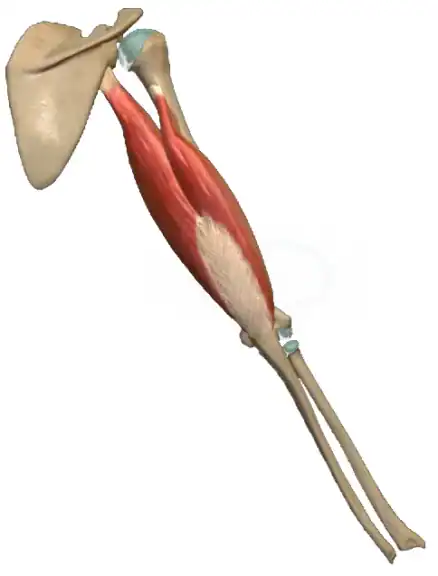
The cards below are loaded dynamically from the Basics of anatomy category. The current collection covers the biceps, triceps, pectoralis major, and adductor muscles.
Practical application
Use anatomy to improve the question you ask about an exercise—not to force every movement into a one-muscle explanation.
Identify the muscle, its attachment sites, its broad fiber direction, and the joints it crosses.
Note the movements and stabilizing roles the structure can contribute to, while keeping the rest of the system in view.
Check the actual joint positions, movement path, range of motion, external load, and technique constraints.
Decide whether the exercise fits the person’s goal, experience, available equipment, comfort, and training plan.
Use the right tool
Build the full picture
Anatomy is one layer. Use these hubs for movement instruction, physiological context, program decisions, and practical plans.
Move from structural context to clear exercise explanations and technique cues.
Learn how goals, training variables, progression, and recovery fit together.
Add physiological context to the structures and movements you are studying.
Browse adaptable gym and home examples after you understand the movement and programming context.
When you move from anatomy to a real exercise, the free checklist can help you review setup, control, range of motion, breathing, and when to stop and reassess. It supports technique review; it does not diagnose symptoms or turn general education into individual advice.
Optional and secondary: understand the anatomy content first.
About the educator
Olaf connects anatomy with movement and training while separating general education from diagnosis, treatment, and individual prescription.
About OlafThis hub provides general education about anatomy and training. It cannot assess pain, injury, medical readiness, rehabilitation needs, or the right exercise for an individual. If a movement causes pain, symptoms are new or worsening, or you have a relevant health condition, stop and seek appropriate guidance from a qualified healthcare or exercise professional.
Frequently asked questions
It is the study of muscle structure, location, attachments, and possible actions in a training context. It helps you understand movement and exercise terminology, but it does not prescribe a complete program by itself.
No. A muscle may contribute to different movements or stabilization roles, and most actions involve several muscles working together.1 Its role also depends on the joint position and task.
Anatomy focuses on structure and the relationships between body parts. Physiology focuses on how those parts function and respond. Training questions often need both perspectives.4
Anatomy can help explain what an exercise asks a structure to do. Choosing an exercise also requires the goal, technique, range, load, equipment, comfort, experience, and wider program context. There is no single universally best option from anatomy alone.
No. Educational anatomy content cannot determine the cause of symptoms or replace an individual clinical assessment.
Evidence base
Claim/Source Mapping
The table maps scientific and training-related statements on this page. It does not map interface copy, SEO choices, or internal-link strategy.
| Claim | Source | Use and boundary |
|---|---|---|
| Skeletal muscles transmit force through tendons and work with bones, joints, and other muscles to produce or control movement. | 1 | Supports the basic musculoskeletal and agonist/antagonist/ synergist explanation; it does not prescribe an exercise. |
| Muscle architecture is relevant to functional capacity and helps explain why a name or single action is incomplete. | 2 | Supports architecture-to-function context; no individual performance prediction is made. |
| Joint position, movement context, and interactions between muscles and joints matter when interpreting a muscle’s role. | 3 | Supports the kinesiology context; no diagnostic or treatment claim is made. |
| Anatomy focuses on structure, while physiology focuses on function. | 4 | Supports the basic distinction; the page still connects both perspectives for training education. |
| Locate → describe possible actions → inspect the exercise → return to the person. | Olaf’s educational framework, informed by 1–3 | Editorial learning framework; not presented as a validated protocol, clinical method, or individual prescription. |
↔ On smaller screens, scroll the table horizontally.