
Nutrition explained · Vegetarian diets · Vitamin B12
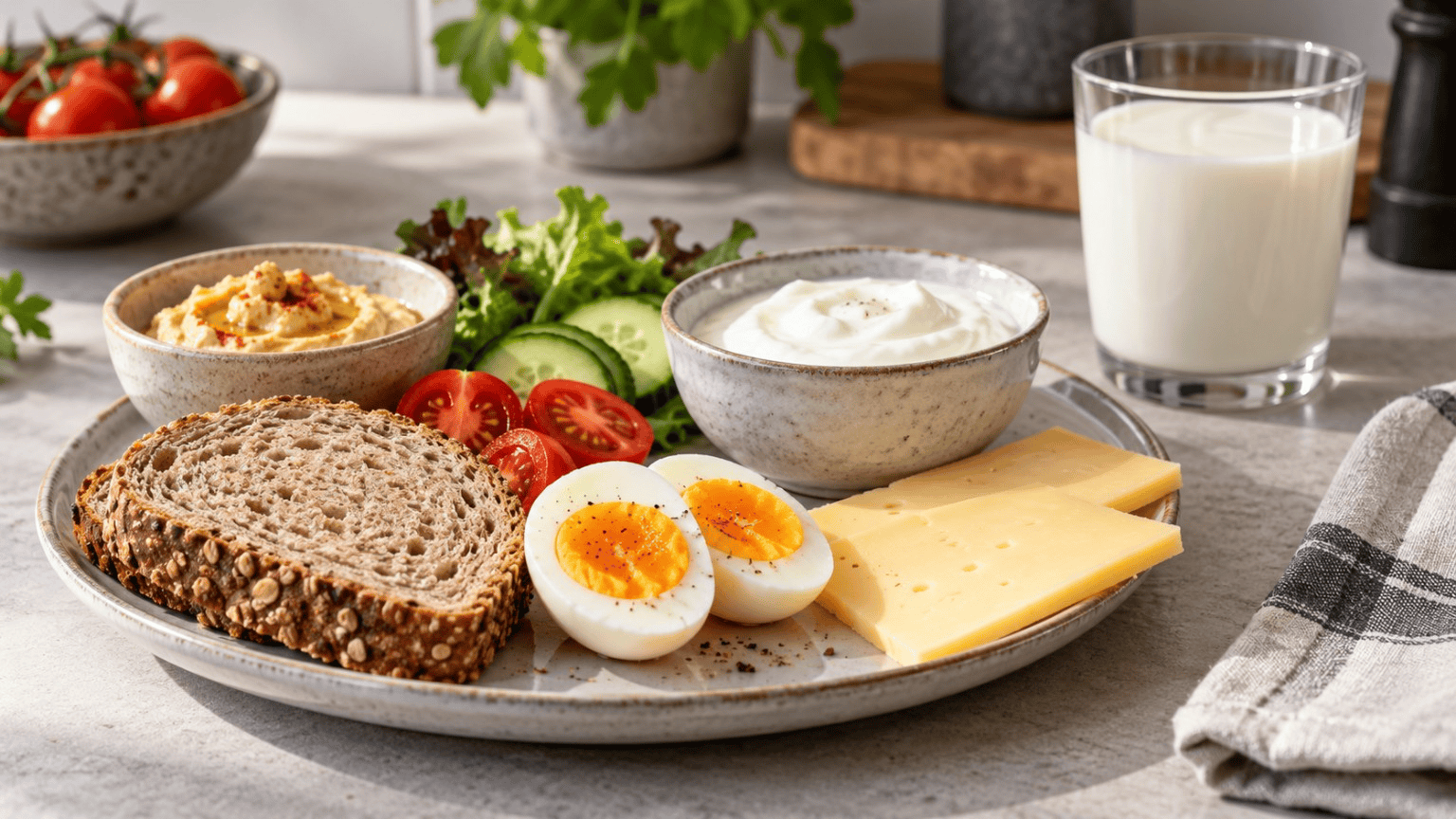
Eggs and dairy contain vitamin B12. But whether they cover your needs depends on what you actually eat, how consistently you eat it, and whether your body can absorb the vitamin.
Short answer: are eggs and dairy enough for vitamin B12?
People who eat eggs and dairy (lacto-ovo vegetarians) can obtain vitamin B12 from those foods. However, amounts differ across foods and serving sizes, and some vegetarians eat little dairy or only occasional eggs. Regularly consuming B12-fortified foods or a suitable supplement can help when dietary sources are insufficient. A food calculation alone cannot confirm your vitamin B12 status.1, 2, 3
In the United States, the recommended dietary allowance (RDA) for most adults is 2.4 micrograms (mcg) per day. Germany uses a different kind of reference value: an estimated adequate intake of 4.0 mcg/day. These are not identical methods, and neither figure is a prescription for a supplement dose.1, 2
Why vitamin B12 matters
Vitamin B12, also called cobalamin, helps the body form healthy red blood cells, synthesize DNA, and maintain normal nervous-system function. Prolonged deficiency can cause anemia and neurological problems, including numbness or tingling; neurological symptoms can occur even without anemia.1
B12 is made by certain microorganisms and reaches the human diet primarily through animal-derived foods. Unfortified plant foods are not dependable B12 sources. The presence of trace B12-like compounds in a food does not establish that it supplies useful amounts of active vitamin B12.1, 2
Three terms worth knowing
- Dietary intake
- The amount of vitamin B12 in the foods and supplements you consume. Food databases provide estimates, not a measurement of how much your body absorbs.
- Absorption
- The process by which B12 moves from the gut into the body. It involves stomach and intestinal functions and may be affected by age, illness, or medicines.1
- Vitamin B12 status
- How well supplied your body appears to be based on the clinical picture and, when appropriate, laboratory markers. It cannot be inferred reliably from one meal.1
Which vegetarian diets contain natural B12 sources?
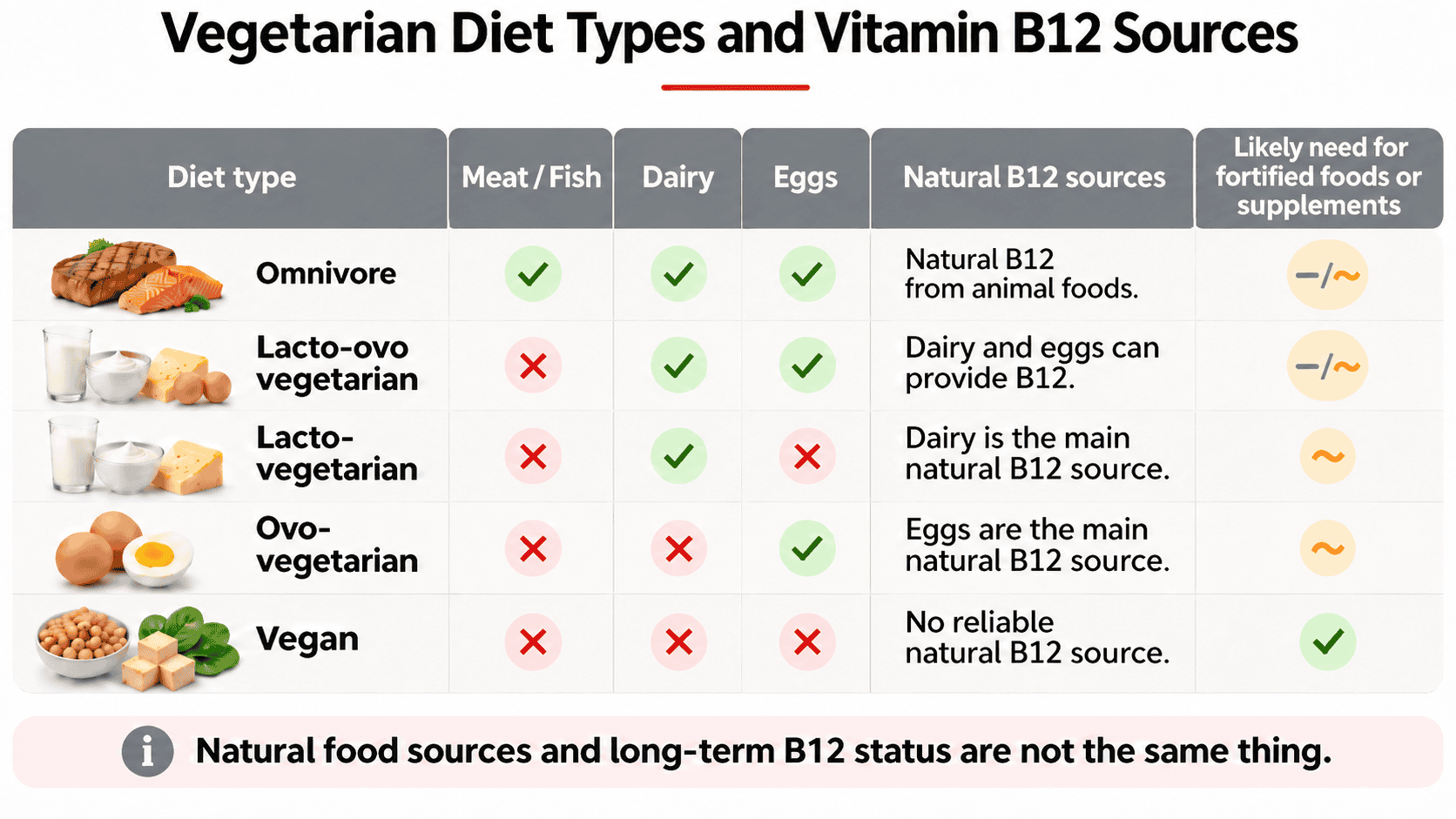
People use the word vegetarian differently. For B12 planning, it helps to distinguish the foods included in the diet:
Swipe or scroll horizontally to view the full comparison table.
| Diet pattern | Eggs and dairy | Potential B12 sources |
|---|---|---|
| Lacto-ovo vegetarian | Both included | Milk, yogurt, cheese, eggs; fortified foods and supplements if needed.1 |
| Lacto-vegetarian | Dairy, not eggs | Dairy products; fortified foods and supplements if needed.1 |
| Ovo-vegetarian | Eggs, not dairy | Eggs; fortified foods and supplements if needed.1 |
| Vegan | Neither | Dependable B12-fortified products and a reliably planned B12 supplement strategy; no dependable natural unfortified plant source.1, 3 |
The labels describe foods included, not how much is actually eaten or whether a person's current B12 status is adequate.
How much vitamin B12 do adults need?
Reference values are used to plan and assess diets for healthy populations. They vary across authorities and life stages. In US guidance, the adult RDA is designed to cover the requirements of almost all healthy adults; Germany's value is described as an estimate of adequate intake.1, 2
Different reference method; do not treat it as a US RDA.2
Different life-stage needs; individualized assessment matters.1
For comparison, German estimated adequate intakes are 4.5 mcg/day during pregnancy and 5.5 mcg/day during breastfeeding. The numerical differences do not prove that one country has discovered a universal biological cutoff; guidelines are derived using different methods.2
Important distinction: A recommended daily intake is not the same as the amount of B12 in a supplement tablet, and a single day below a reference value does not diagnose deficiency. Long-term intake, absorption, and individual health circumstances matter.1, 4
How much B12 is in eggs, milk, yogurt and cheese?
The following examples are from the US National Institutes of Health (NIH) Office of Dietary Supplements food table, which uses US Department of Agriculture nutrient data. They are illustrative values for specified servings, not promises about every brand, recipe, or country.1
Swipe or scroll horizontally to view the full food table.
| Food | Example US serving | Vitamin B12 per serving |
|---|---|---|
| Whole egg, cooked | 1 large | About 0.5 mcg1 |
| Cow's milk, 2% fat | 1 US cup (about 240 mL) | About 1.3 mcg1 |
| Plain nonfat yogurt | 6 oz container (about 170 g) | About 1.0 mcg1 |
| Cheddar cheese | 1.5 oz (about 43 g) | About 0.5 mcg1 |
| Fortified breakfast cereal | 1 serving containing 25% of the US daily value | About 0.6 mcg for the product example; check the label1 |
Values represent specific foods and serving definitions. Fortification varies: do not assume an oat drink, cereal, or nutritional yeast product contains B12 unless its label says so.
A realistic calculation (and what it does not prove)
One large cooked egg (0.5 mcg), one cup of 2% milk (1.3 mcg), and 1.5 oz of cheddar (0.5 mcg) add up to approximately 2.3 mcg B12. Add one six-ounce container of plain nonfat yogurt (1.0 mcg) and that illustrative total becomes approximately 3.3 mcg. The arithmetic uses the NIH food-table values, not an analysis of a real person's diet.1
These are only selected foods, not complete meal plans. They do not tell you what was absorbed, whether this pattern is maintained, or what a blood test would show. Nor are they a recommendation to eat these particular dairy portions every day. The relevant question is whether the overall routine provides a dependable source.1, 4
Realistic US grocery-store choices
Ten sample days: five diet patterns, two food choices each
What does B12 planning look like with foods you can find in ordinary Western US grocery stores? The five comparisons below show two complete food-day menus per diet pattern: A is an everyday example, while B makes a specific B12-aware choice. These are modeled illustrations for adults, not meal prescriptions or examples of what people in each group usually eat.
Meals use familiar US measures such as cups, ounces and large eggs. Amounts in these examples describe foods to put on a plate, not individualized calorie or macronutrient targets. Energy, protein, carbohydrate and fat totals are deliberately not reported without a consistent, verified food-composition calculation for every ingredient and prepared recipe. Actual needs and portion sizes vary.
Exactly what the B12 numbers mean
The values below are reproducible subtotals from selected, explicitly counted foods, using the standard US servings in the National Institutes of Health (NIH) vitamin B12 food table. They are not a comprehensive analysis of every ingredient or a measurement of absorption. A different milk, yogurt, cheese, egg size, fish species, cereal or recipe may yield a different amount. Even a subtotal above 2.4 mcg does not prove adequate long-term B12 status. 1
For the two comparisons involving fortified soy beverages, the calculation uses a conditional example Nutrition Facts label showing vitamin B12 at 50% of the US Daily Value per cup. Because the US adult label Daily Value is 2.4 mcg, that would equal 1.2 mcg per labeled cup. It does not describe a verified brand. Check the actual carton and cereal box; if they do not match those labels, the printed subtotal does not apply. 1, 8
Swipe horizontally to compare the values in this table on a smaller screen.
| Diet pattern | Everyday day A | B12-aware day B | Source basis |
|---|---|---|---|
| Omnivore | 2.1 mcgLower in this pair | 4.4 mcgHigher in this pair | NIH standard servings |
| Lacto-ovo vegetarian | 2.0 mcgLower in this pair | 3.9 mcgHigher in this pair | NIH standard servings |
| Lacto-vegetarian | 1.3 mcgLower in this pair | 2.8 mcgHigher in this pair | NIH standard servings |
| Ovo-vegetarian | 1.0 mcgLower in this pair | 2.8 mcgHigher in this pair | Conditional label values |
| Vegan | No reliable counted sourceLower in this pair | 3.0 mcgHigher in this pair | Conditional label values |
Color and labels compare the two selected-food B12 subtotals within each pair only. Green means higher than the corresponding A example, not medically adequate intake or proven B12 status. The fortified-product estimates depend on the stated Nutrition Facts labels.
Subtotals refer only to the specifically counted B12 foods in each sample day. For the unfortified vegan example, “no reliable source” does not imply a laboratory-tested exact zero. The fortified-drink examples are conditional on matching food labels. 1, 8
Comparison 1 of 5
Omnivore: turkey versus salmon
How changing one familiar protein food changes the B12 estimate without turning the day into a B12 prescription.
Everyday grocery-store day
Turkey and dairy appear in ordinary US meals.
Breakfast
- ¾ cup dry rolled oats cooked with 1 cup (8 fl oz) 2% dairy milk
- ½ cup blueberries
- 1 tbsp almond butter
Lunch
- 3 oz roasted turkey breast, weighed after cooking
- 2 small corn tortillas
- ½ cup cooked black beans
- Salsa, shredded cabbage and ¼ avocado
Dinner
- 1 cup cooked brown rice
- 1½ oz cheddar cheese
- Roasted zucchini, bell pepper and spinach
- Olive oil dressing
Snacks
- 1 apple
- ¼ cup unsalted almonds
- Carrots and hummus
B12-aware food swap
Atlantic salmon replaces turkey; the other meals stay the same.
Breakfast
- ¾ cup dry rolled oats cooked with 1 cup (8 fl oz) 2% dairy milk
- ½ cup blueberries
- 1 tbsp almond butter
Lunch
- 3 oz cooked Atlantic salmon instead of turkey
- 2 small corn tortillas
- ½ cup cooked black beans
- Salsa, shredded cabbage and ¼ avocado
Dinner
- 1 cup cooked brown rice
- 1½ oz cheddar cheese
- Roasted zucchini, bell pepper and spinach
- Olive oil dressing
Snacks
- 1 apple
- ¼ cup unsalted almonds
- Carrots and hummus
What this pair shows
The selected-food B12 subtotal rises with salmon. This does not show that every fish dish has the same value or that consuming fish guarantees adequate B12 status.
Comparison 2 of 5
Lacto-ovo vegetarian: eggs, yogurt, milk and cereal
A plan containing both eggs and dairy can vary substantially in how much B12 comes from the specific foods chosen.
Everyday vegetarian day
Two eggs and a container of yogurt supply the counted B12.
Breakfast
- 2 large cooked eggs
- 2 slices sourdough toast
- ½ avocado and sliced tomato
Lunch
- 1 cup cooked quinoa with tofu and cucumber
- Roasted bell peppers, spinach and olive-lemon dressing
Dinner
- 2 corn tortillas filled with black beans, roasted sweet potato and salsa
- Side salad with pumpkin seeds
Snacks
- 1 6-oz (170 g) container plain fat-free dairy yogurt
- 1 cup grapes and a handful of walnuts
B12-aware vegetarian day
Breakfast includes labeled fortified cereal and 2% milk.
Breakfast
- 2 large cooked eggs
- 1 serving breakfast cereal whose Nutrition Facts states 25% DV B12
- 1 cup (8 fl oz) 2% dairy milk
- ½ cup berries
Lunch
- 1 cup cooked quinoa with tofu and cucumber
- Roasted bell peppers, spinach and olive-lemon dressing
Dinner
- 2 corn tortillas filled with black beans, roasted sweet potato and salsa
- Side salad with pumpkin seeds
Snacks
- 1 6-oz (170 g) container plain fat-free dairy yogurt
- 1 cup grapes and a handful of walnuts
What this pair shows
This is possible within a lacto-ovo pattern, but one intentionally B12-rich day does not establish habitual adequacy or rule out absorption problems.
Comparison 3 of 5
Lacto-vegetarian: dairy without eggs
Dairy servings are included; eggs, fish, meat and poultry are not.
Everyday lacto-vegetarian day
One cup of milk is the specifically quantified B12 source.
Breakfast
- ¾ cup dry oats made with 1 cup (8 fl oz) 2% dairy milk
- 1 banana and 1 tbsp peanut butter
Lunch
- Whole-wheat pita stuffed with chickpeas, cucumber, tomato and hummus
- Orange or seasonal fruit
Dinner
- Whole-wheat pasta with lentil-tomato sauce
- Sautéed kale, zucchini and olive oil; no eggs or cheese
Snacks
- 1 apple and ¼ cup roasted nuts
- Carrot sticks with tahini dip
Dairy choices planned deliberately
Yogurt and cheddar join the counted milk serving.
Breakfast
- ¾ cup dry oats made with 1 cup (8 fl oz) 2% dairy milk
- 1 banana and 1 tbsp peanut butter
Lunch
- Whole-wheat pita stuffed with chickpeas, cucumber, tomato and hummus
- Orange or seasonal fruit
Dinner
- Whole-wheat pasta with lentil-tomato sauce
- Sautéed kale, zucchini and olive oil; no eggs
Snacks
- 1 6-oz (170 g) container plain fat-free dairy yogurt
- 1½ oz cheddar on whole-grain crackers
- 1 apple
What this pair shows
Changing food selection can increase a modeled B12 subtotal without changing the diet label. This example is not a recommendation to eat large amounts of cheese.
Comparison 4 of 5
Ovo-vegetarian: eggs without dairy
Without dairy, fortified products may play a greater practical role alongside eggs.
Egg-based, unfortified day
Two eggs are the quantified food B12 source.
Breakfast
- 2 large cooked eggs
- Whole-wheat toast with avocado
- 1 cup unfortified plant beverage (check label)
Lunch
- Quinoa-and-edamame bowl with cucumber, carrots and sesame dressing
Dinner
- Black-bean burrito bowl: brown rice, grilled peppers, lettuce, tomato salsa and corn
- No cheese, yogurt or dairy sauce
Snacks
- 1 pear and a handful of peanuts
- Carrots with hummus
Eggs plus fortified choices
The plant beverage and breakfast cereal have explicitly defined example labels.
Breakfast
- 2 large cooked eggs
- 1 serving cereal labeled 25% DV vitamin B12 (check for dairy-free ingredients)
- 1 cup fortified soy beverage labeled 50% DV vitamin B12
- Fresh berries
Lunch
- Quinoa-and-edamame bowl with cucumber, carrots and sesame dressing
Dinner
- Black-bean burrito bowl: brown rice, grilled peppers, lettuce, tomato salsa and corn
- No cheese, yogurt or dairy sauce
Snacks
- 1 pear and a handful of peanuts
- Carrots with hummus
What this pair shows
The larger subtotal depends on finding products with those actual labels and using those serving sizes. Eating two eggs does not make fortified foods unnecessary for every ovo-vegetarian.
Comparison 5 of 5
Vegan: reliable fortified sources must be planned
A varied plant-food menu can be nutritious yet contain no dependable vitamin B12 source unless it is fortified or paired with supplementation.
Plant foods without fortification
No dependable B12 source is included in the modeled menu.
Breakfast
- ¾ cup dry rolled oats with 1 cup unfortified soy beverage (read the label)
- Berries and walnuts
Lunch
- Chickpea-and-quinoa bowl with kale, cucumber, avocado and lemon-tahini dressing
Dinner
- Tofu-and-black-bean tacos with grilled peppers, corn tortillas and salsa
- Side of roasted sweet potato
Snacks
- 1 apple with peanut butter
- Vegetables and hummus
Fortified products plus a reliable supplement plan
An explicit two-cup soy-beverage label example and fortified cereal show how food labels change the estimate.
Breakfast
- 1 serving cereal labeled 25% DV vitamin B12
- 1 cup fortified soy beverage labeled 50% DV vitamin B12
- Berries and walnuts
Lunch
- Chickpea-and-quinoa bowl with kale, cucumber, avocado and lemon-tahini dressing
Dinner
- Tofu-and-black-bean tacos with grilled peppers, corn tortillas and salsa
- Side of roasted sweet potato
Snacks
- 1 cup of the same fortified soy beverage (50% DV B12 per cup)
- 1 apple with peanut butter
- A reliable B12 supplement strategy planned separately; no dose modeled
What this pair shows
Even a fortified-food example reaching the numerical US adult RDA does not confirm B12 status or validate every product. Vegans should plan a dependable long-term B12 source, with supplementation commonly recommended.
How to use these ten examples
Look at which choices changed, not merely the largest number. When someone regularly consumes few animal foods, deliberately choosing suitable fortified products or a B12 supplement may be important. For a vegan diet, a dependable long-term B12 strategy—including supplementation as appropriate—should be planned rather than relying on an occasional cereal or beverage. Someone who has absorption problems may require medical assessment and treatment regardless of how well their menu looks on paper. 1, 3, 5, 6
US versus international context: these examples use American serving sizes and the US adult RDA for orientation. The German estimated adequate intake of 4.0 mcg/day uses a different reference-value approach; the numerical difference does not make any one day's modeled subtotal a diagnostic test. 1, 2
Why eating enough B12 is not the same as having enough B12
Food-bound B12 has to be released from food proteins in the digestive tract and then binds to intrinsic factor, a stomach-produced protein that helps B12 absorption in the last part of the small intestine. Fortified foods and supplements provide B12 in a free form, which avoids the initial release step. Neither form guarantees absorption in every medical circumstance.1
Absorption also depends on the amount taken at one time: intrinsic-factor-mediated uptake has limited capacity, so the proportion absorbed declines at larger doses. That is one reason a supplement may contain much more B12 than a daily dietary reference value.1
A 2023 systematic review examined intake and measured B12 status in groups at risk, including vegetarians and vegans. Only 18 studies met the authors' inclusion criteria, with just four intervention studies covering vegetarians and vegans. The investigators rated the evidence about which habitual intakes consistently ensured adequate status as limited and inconclusive. This does not mean that dietary guidelines are useless; it means that an exact amount on paper is not an individual guarantee.4
When are fortified foods or B12 supplements useful?
If eggs and dairy are infrequent or their combined B12 contribution is consistently low, products explicitly fortified with B12 or an appropriately chosen supplement provide a more dependable way to plan intake. Check the actual B12 amount per serving on the Nutrition Facts or Supplement Facts label; unfortified plant milks and regular nutritional yeast should not be assumed to contain the vitamin.1, 3
In reviews of plant-based diets, regular B12 supplementation is a practical preventive approach. However, evidence is not strong enough to prescribe one universal supplement dose and schedule for every vegetarian, and prevention is a different task from treating a diagnosed deficiency.4, 5
Cyanocobalamin is a common supplemental form; methylcobalamin and other forms are also used. The NIH reports no evidence that one supplemental B12 form is absorbed better than the others as a general rule. If you already have possible deficiency, symptoms, a known absorption disorder, or a pregnancy-related concern, discuss testing and an appropriate regimen with a qualified clinician rather than treating a generic online dose as personalized care.1, 6
What about vegans?
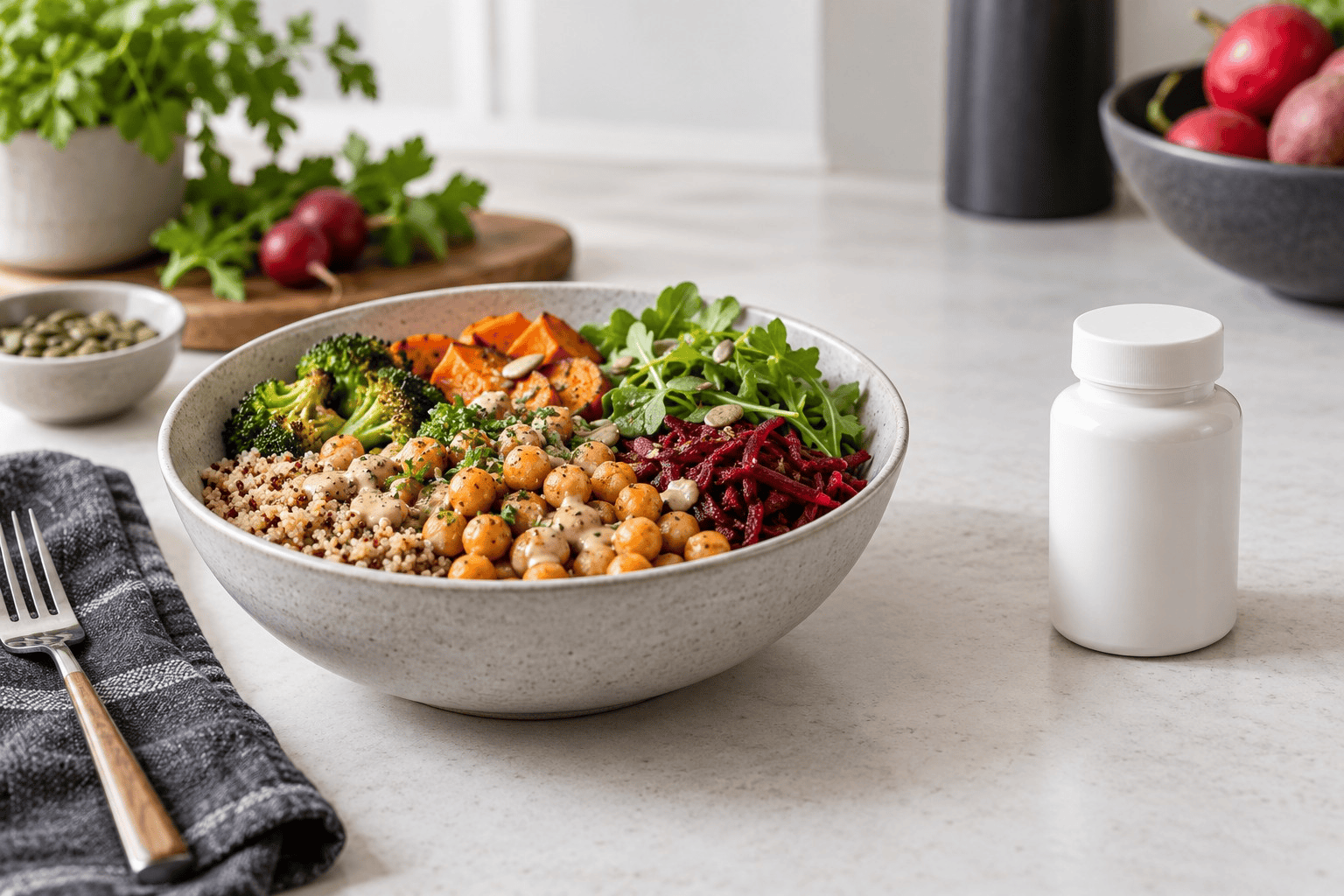
Someone eating no eggs, dairy, fish, or meat lacks the usual natural dietary B12 sources. Dependable fortified foods can contribute, but a reliable B12 supplementation plan is generally recommended to reduce deficiency risk; relying on algae, fermented foods, or unfortified plant foods is not a sound substitute.1, 2, 3
Who may need B12 testing, and which tests matter?
Vegetarians with low or uncertain intake, vegans, older adults, people with stomach or intestinal disease or surgery, and people using medicines such as metformin or long-term acid-suppressing medication deserve particular attention to B12 status. Pregnancy and breastfeeding make adequate maternal B12 supply especially important.1, 3, 6

Unexplained fatigue, anemia, tongue changes, numbness, tingling, or balance problems can have many causes, but B12 deficiency is among those a clinician may investigate. New or progressive neurological symptoms call for prompt medical evaluation. Importantly, B12 deficiency cannot be ruled out just because anemia is absent.1, 6
For suspected deficiency, clinical guidance generally begins with serum total B12 or active B12 (holotranscobalamin), depending on the setting. Methylmalonic acid (MMA), a metabolic marker that may rise with insufficient cellular B12, can help interpret some uncertain results. MMA is also affected by kidney function, while homocysteine is less specific because several other factors can influence it.1, 6
The UK's National Institute for Health and Care Excellence (NICE) provides a detailed diagnostic pathway for people aged 16 and older. It is a UK clinical guideline, not a US diagnostic rule. Test selection, thresholds, urgency, and treatment should follow the person's clinical context and local professional guidance, rather than a fixed internet cutoff.6
Before ordering a test or starting treatment
Tell your clinician whether you already take B12, including dose and formulation, because supplements can change blood markers. When deficiency is suspected, testing is ideally arranged before replacement, but urgent treatment should not be delayed for test results in situations specified by clinical guidance, particularly concerning neurological presentations.6
How strong is the evidence comparing plant-based diets?
A 2024 systematic review and meta-analysis reported that adult vegans, particularly those not supplementing, often had less favorable B12 markers than omnivores. Results varied across studies and biomarkers, and the work cannot determine the status of an individual vegetarian or prove that a particular amount of eggs or milk prevents deficiency. Supplement use was associated with better B12 markers among vegans, but the comparisons included observational evidence and should not be interpreted as a definitive optimal dosing trial.7
A practical B12 checklist for vegetarians
Do you actually consume dairy, eggs, both, or neither on a regular basis?
Note the B12 content per serving of your usual foods and fortified products.1
Look at habitual intake across weeks, not a specially selected high-B12 day.4
If food sources are insufficient or uncertain, use a dependable fortified-food or supplement strategy.1, 3, 5
Want to understand nutrition more clearly?
Explore the Nutrition Explained hub for practical, evidence-informed guidance on dietary patterns, nutrients, and common misconceptions.
Explore nutrition basicsFor more about the author's training and qualifications, visit About Olaf Henning.
Frequently asked questions
Can one egg a day cover vitamin B12 needs?
Not usually by itself. The NIH example for one large cooked egg provides about 0.5 mcg B12, compared with a US adult RDA of 2.4 mcg/day. Other foods and overall intake still matter.1
Is dairy a better B12 source than eggs?
It depends on the food and serving. In the NIH table, one cup of 2% milk provides about 1.3 mcg and a large cooked egg about 0.5 mcg, but neither figure describes every dairy product or egg size.1
Can fortified oat milk replace cow's milk for B12?
Only if the oat milk is actually fortified and you consume enough of it to make a useful contribution. B12 content differs by product, so check the label rather than assuming all plant milks contain it.1, 3
Do all vegetarians need a B12 supplement?
Not necessarily. Some people who eat dairy and eggs may obtain enough B12 from their overall diet. When habitual sources are inadequate or uncertain, a dependable supplement or fortified-food strategy is sensible. People with symptoms or absorption problems need individualized assessment.1, 2, 5, 6
Do the ten sample food days guarantee enough vitamin B12?
No. Their numbers are selected-food, source-based intake subtotals, not a full nutrient assay or a measurement of absorption. Fortified soy-beverage examples only apply to products carrying the stated labels; an isolated food day cannot establish adequate long-term B12 status.1, 8
Can a normal blood count rule out B12 deficiency?
No. Vitamin B12 deficiency can be present without anemia or enlarged red blood cells. A clinician considers symptoms, risk factors, and relevant laboratory markers.1, 6
Is more B12 automatically better for gym performance?
No. B12 is important for normal body function, but NIH reviews do not find an athletic-performance benefit from supplementation in people who already have adequate B12 status.1
References
- National Institutes of Health, Office of Dietary Supplements. Vitamin B12: Fact Sheet for Health Professionals. Accessed October 30, 2026. Full source.
- German Nutrition Society (DGE). Vitamin B12: reference intake and frequently asked questions. Accessed October 30, 2026. Full source.
- German Federal Institute for Risk Assessment (BfR). Vitamin B12 in plant-based diets: attention to adequate supply. Accessed October 30, 2026. Full source.
- Barebring L, Lamberg-Allardt C, Thorisdottir B, et al. Intake of vitamin B12 in relation to vitamin B12 status in groups susceptible to deficiency: a systematic review. Food Nutr Res. 2023;67. doi:10.29219/fnr.v67.8626. Full source.
- Hannibal L, Lederer AK, Storz MA, Huber R, Jacobsen DW. Vitamin B12 Status and Supplementation in Plant-Based Diets. Food Nutr Bull. 2024;45(1_suppl):S58-S66. doi:10.1177/03795721241227233. Full source.
- National Institute for Health and Care Excellence (NICE). Vitamin B12 deficiency in over 16s: diagnosis and management. Guideline NG239. March 6, 2024. Full source.
- Niklewicz A, Hannibal L, Warren M, Ahmadi KR. A systematic review and meta-analysis of functional vitamin B12 status among adult vegans. Nutr Bull. 2024;49(4):463-479. doi:10.1111/nbu.12712. Full source.
- U.S. Food and Drug Administration. Daily Value on the Nutrition and Supplement Facts Labels. The adult vitamin B12 Daily Value is 2.4 mcg; a label declaring 50% DV would correspond to 1.2 mcg per labeled serving. Full source.