
Nutrition basics · Hydration · Evidence explained
Coffee makes some people visit the bathroom more often. Does that mean the drink has left them dehydrated? The answer depends on what you measure, how much caffeine you consume, and whether you are resting or exercising.
Will caffeine dehydrate you?
Usually not when it comes from ordinary amounts of coffee or tea in otherwise healthy adults. Caffeine can temporarily increase urine production, particularly at rest or with a larger dose. But an increase in urine output is not the same thing as a demonstrated loss of body water that leads to dehydration. Controlled research finds that customary coffee consumption can contribute to hydration much like water, although study populations and doses have limits.1, 2, 3
First, the language
Key terms, simply explained
Diuresis
Producing more urine over a specified period. This is a kidney-output measurement, not a diagnosis of dehydration.
Hydration and fluid balance
Hydration refers to body-water status. Fluid balance considers fluids taken in and lost through urine, sweat, breathing, and other routes over time.
Milligrams and body-weight doses
A milligram (mg) measures caffeine mass. A dose in milligrams per kilogram (mg/kg) scales the amount to body weight; it does not prove that a dose is safe for everyone.
Why more urine does not automatically mean dehydration
There are at least three different questions: Does caffeine change urine output? Does a drink contribute fluid? And does body-water status become worse? These are related, but they are not interchangeable outcomes. In particular, a few hours of additional urine output do not alone establish sustained dehydration.1, 2, 3
Also ask what a caffeinated drink was compared with. Coffee versus the same volume of water tests one question; caffeine tablets versus placebo test another; and drinking coffee versus drinking nothing is a different comparison again. Mixing these comparisons can turn a small urine effect into an exaggerated headline.1, 2, 3
What does the hydration research actually show?
A meta-analysis combining 16 studies in healthy adults found a small average increase in urine volume after caffeine, corresponding to approximately 109 milliliters (mL) in the reported pooled comparison. The median caffeine dose was 300 mg. Variation between studies was substantial, and the result was different at rest and during exercise; this is not a prediction for an individual cup of coffee.1
A separate controlled trial studied 50 male habitual coffee drinkers over two three-day conditions. Four daily 200-mL servings of coffee supplying about 4 mg/kg caffeine were compared with equal volumes of water. The investigators found no meaningful between-condition differences in their measured total-body-water and common hydration markers. This supports fluid contribution from coffee in the population studied, not equivalence for every person or every dose.2
Another randomized beverage study enrolled 72 adequately hydrated men; different drinks were compared with water using short-term urine collections. For the beverages tested, coffee and tea did not show a different four-hour cumulative urine response from water. It was a short-term lab study, not evidence for all-day hydration under heat or illness.3
Swipe or scroll horizontally to view the full evidence table.
| Evidence | Who, dose, comparison | Outcome measured | What it supports / does not support |
|---|---|---|---|
| Zhang et al., 2015 1 | 16 studies; healthy adults; median 300 mg caffeine; different controls and activity conditions | Urine volume, not a single uniform measure of dehydration | Small pooled diuretic effect; larger signal at rest than during exercise; heterogeneity matters. |
| Killer et al., 2014 2 | 50 male habitual coffee drinkers; 800 mL/day coffee (~4 mg/kg caffeine) versus water; three days/condition | Total body water and blood/urine markers | No clear hydration difference in this specific sample; not proof for nonhabitual drinkers or pregnancy. |
| Maughan et al., 2016 3 | 72 euhydrated men; 1 L test beverage, coffee/tea among drinks; water comparison | Four-hour urine output, beverage retention index | Water and tested coffee/tea had similar urine responses; not a long-term or heat-exposure trial. |
A "no statistically significant difference" result is not proof of exact equivalence. Small samples, different caffeine habits and short measurement periods limit generalization.
Does the amount of caffeine matter?
Yes, dose and circumstances matter. In a small crossover study of 10 healthy habitual coffee drinkers at rest, participants consumed 200 mL water or coffee containing either 3 or 6 mg/kg caffeine. Over three hours, urine volume was higher after the 6 mg/kg coffee condition (about 613 mL) than after water (about 356 mL) or 3 mg/kg coffee (about 316 mL). The high-dose condition corresponded to a mean caffeine amount of about 537 mg.4
What this does not mean: 6 mg/kg is not a universal dehydration threshold, and the three-hour urine result does not establish sustained body-water deficit. The study was small, involved largely men, and tested an unusually caffeine-dense drink.4
Regular caffeine users may have a smaller urine response than infrequent users, but tolerance is not uniform and should not be used as a safety guarantee. The precise amount, timing, beverage volume, and baseline hydration status still matter.1, 2, 4
What about caffeine during exercise?
The 16-study meta-analysis found a clearer diuretic signal at rest, while the exercise subgroup did not show a statistically detectable increase in measured urine output. This does not mean that every exercise session is protected from fluid losses: sweat losses, heat, duration, drink access, and individual needs remain important.1
A 2026 review of randomized trials in athletes found a greater frequency of self-reported increased urination and other acute side effects after caffeine than placebo. Its reported side-effect outcomes do not directly quantify sustained dehydration, so they should not be confused with controlled body-water measurements. A finding about bathroom visits cannot settle the whole hydration question.5
The International Society of Sports Nutrition reports that caffeine can improve some exercise outcomes, often in studies using 3-6 mg/kg. That performance-oriented research range is not a recommendation that everyone should take these doses. Sensitivity, sleep, the environment, adverse effects, and medical circumstances can change the decision.6
How much caffeine is in your drink?
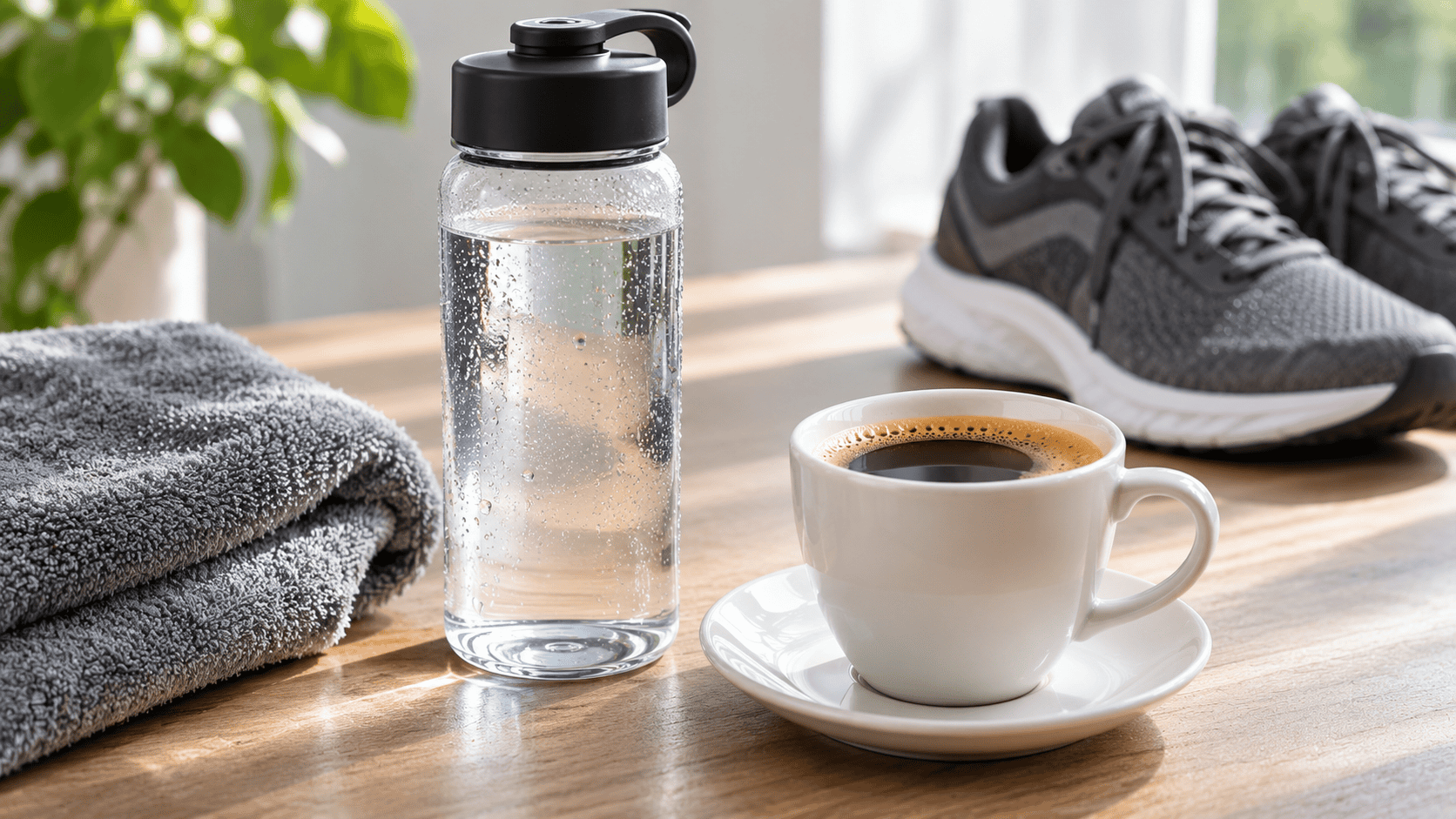
The caffeine content of a drink can vary considerably by size, brand, brewing method, and formulation. The U.S. Food and Drug Administration (FDA) lists these illustrative amounts for 12 U.S. fluid ounces (about 355 mL) of beverage, not for every serving sold.7
Swipe or scroll horizontally to view the full caffeine table.
| Beverage type | FDA example per 12 fl oz (355 mL) | How to use this number |
|---|---|---|
| Brewed regular coffee | 113-247 mg | Highly variable; cup size alone is not a caffeine dose. |
| Black tea | About 71 mg | Preparation strength and serving size can change it. |
| Caffeinated soft drink | 23-83 mg | Check brand labeling where available. |
| Energy drink | 41-246 mg | Check the entire container and added stimulant sources. |
Values are FDA examples, not exact product composition or recommended amounts.7
Is 400 mg per day safe?
The FDA cites 400 mg/day as an amount not generally associated with negative effects for most adults, while emphasizing individual sensitivity, medications, and health conditions. The European Food Safety Authority (EFSA) separately concludes that up to 400 mg/day spread across the day generally does not raise safety concerns for healthy nonpregnant adults; its single-dose assessment uses a different context. These are population-level benchmarks, not guarantees of safety or hydration for every person.7, 8
Sleep disruption, palpitations, anxiety, and other side effects may matter well below a general daily benchmark. Pure caffeine powders and highly concentrated products carry particular poisoning risks and should not be treated like ordinary coffee.7, 8
Pregnancy, breastfeeding, younger people, and medical conditions
Hydration findings from healthy adults are not safety clearance for other groups. Pregnancy, lactation, medicines, cardiovascular symptoms, kidney conditions, and age can change the relevant advice. The right question is broader than whether a beverage adds fluid.7, 8
Pregnancy
The American College of Obstetricians and Gynecologists (ACOG) advises limiting caffeine during pregnancy to less than 200 mg/day. Its guidance indicates that this amount does not appear to be a major contributor to miscarriage or preterm birth, while fetal growth questions remain uncertain; it does not establish risk-free consumption for all outcomes.9
Guidance is not identical worldwide: Health Canada recommends a maximum of 300 mg/day during pregnancy. For an international audience, this difference should be acknowledged rather than presented as one universal threshold. Discuss personal circumstances with a prenatal care professional.10
Breastfeeding
The U.S. Centers for Disease Control and Prevention (CDC) describes roughly 300 mg/day or less as low-to-moderate intake during breastfeeding. The National Library of Medicine's LactMed database stresses that evidence is not strong enough to define one universally safe level; caffeine is cleared particularly slowly by premature or very young infants. If an infant is unusually irritable or sleeping poorly, or was born prematurely, seek individual guidance.11, 12
Children, teens, medications, and health conditions
Do not apply the adult 400-mg benchmark to children or teens. The FDA reports that U.S. pediatric guidance discourages caffeinated energy drinks in this group. People with heart palpitations, high blood pressure, sleep difficulties, kidney or liver conditions, or relevant medication use should discuss caffeine with a qualified clinician rather than relying on a blanket intake target.7, 8
Why the same dose affects people differently
Caffeine is mainly processed by the liver through a family of drug-metabolizing enzymes. One important member is cytochrome P450 1A2 (CYP1A2). A systematic analysis of human pharmacokinetic data found substantial person-to-person variation, including associations with smoking, oral contraceptive use, certain medications, liver disease, and other factors. Pharmacokinetics means how a substance is absorbed, distributed, processed, and removed.13
A half-life is the approximate time required for the amount of a substance in the body to decrease by half. It is not a fixed four-hour countdown for every adult: pregnancy, liver function, medicines, and other characteristics can change it. This is one reason generalized rules about sleep or side-effect timing may fail for individuals.13
The original article listed specific food and drug interactions as though all were established and equally consequential. Because individual exposure, medicine, and disease context matter, use a pharmacist or prescriber to review personal interactions rather than changing medication or caffeine on the basis of a broad online list.7, 13
What should you do in everyday life?
- Count coffee and tea toward fluid intake. There is no good reason to automatically subtract their full volume from your daily fluids because they contain caffeine.2, 3
- Notice dose and timing. If caffeine worsens sleep, causes symptoms, or increases bathroom trips, a lower dose or a different timing may be preferable.7, 8
- For exercise, plan fluids around the environment and session. Caffeine's average urine effects are only one factor; sweat loss and drink access still count.1, 5
- Apply special-population advice rather than general adult numbers during pregnancy, breastfeeding, or when medical conditions or medicines are involved.7, 9, 11, 12
Keep your nutrition decisions in context
Hydration is one part of the picture. Explore how fluid intake, nutrients, and individual needs fit into the wider foundations of nutrition.
Explore nutrition basicsFree educational resource; no affiliate or product recommendation.
Frequently asked questions
Does coffee count as water intake?
Yes. In controlled studies of otherwise healthy adults, coffee contributed fluid, and tested coffee beverages did not show a consistent hydration disadvantage versus comparable volumes of water. That does not establish equivalence for all doses or populations.2, 3
Why do I pee more after caffeine?
Caffeine can increase short-term urine output, particularly at rest and after a larger dose. But urine volume alone does not tell you whether you are clinically dehydrated.1, 4
Are energy drinks as hydrating as water?
They contain fluid, but they vary greatly in caffeine content and other ingredients. Similar hydration is not a general guarantee, and high caffeine doses can cause unwanted effects. Check the product and your circumstances.3, 7
Can caffeine dehydrate me while running or training?
The available urine-output meta-analysis did not find a detectable diuretic effect during exercise, but it did not show that dehydration cannot occur. Heat, sweating, duration, and fluid intake still matter.1
References
- Zhang Y, Coca A, Casa DJ, Antonio J, Green JM, Bishop PA. Caffeine and diuresis during rest and exercise: a meta-analysis. J Sci Med Sport. 2015;18(5):569-574. https://doi.org/10.1016/j.jsams.2014.07.017.
- Killer SC, Blannin AK, Jeukendrup AE. No evidence of dehydration with moderate daily coffee intake: a counterbalanced cross-over study in a free-living population. PLoS One. 2014;9(1):e84154. https://doi.org/10.1371/journal.pone.0084154.
- Maughan RJ, Watson P, Cordery PAA, et al. A randomized trial to assess the potential of different beverages to affect hydration status: development of a beverage hydration index. Am J Clin Nutr. 2016;103(3):717-723. https://doi.org/10.3945/ajcn.115.114769.
- Seal AD, Bardis CN, Gavrieli A, et al. Coffee with high but not low caffeine content augments fluid and electrolyte excretion at rest. Front Nutr. 2017;4:40. https://doi.org/10.3389/fnut.2017.00040.
- Negaresh R, Al-Riyami SAA, Ghahfarrokhi MM, et al. Caffeine use in sport: a systematic review and meta-analysis of acute side effects and implications for athlete health and safety. Sports Med. 2026;56(9):2209-2229. https://doi.org/10.1007/s40279-026-02441-4.
- Guest NS, VanDusseldorp TA, Nelson MT, et al. International society of sports nutrition position stand: caffeine and exercise performance. J Int Soc Sports Nutr. 2021;18:1. https://doi.org/10.1186/s12970-020-00383-4.
- U.S. Food and Drug Administration. Spilling the Beans: How Much Caffeine Is Too Much? FDA Consumer Update. https://www.fda.gov/consumers/consumer-updates/spilling-beans-how-much-caffeine-too-much.
- European Food Safety Authority. Caffeine: food safety topic and summary of scientific opinion. https://www.efsa.europa.eu/en/topics/topic/caffeine.
- American College of Obstetricians and Gynecologists. Moderate Caffeine Consumption During Pregnancy. Committee Opinion No. 462. 2010. https://www.acog.org/clinical/clinical-guidance/committee-opinion/articles/2010/08/moderate-caffeine-consumption-during-pregnancy.
- Health Canada. Caffeine in Foods. Government of Canada. https://www.canada.ca/en/health-canada/services/food-nutrition/food-safety/food-additives/caffeine-foods.html.
- U.S. Centers for Disease Control and Prevention. Maternal Diet and Breastfeeding. Updated March 27, 2026. https://www.cdc.gov/breastfeeding-special-circumstances/hcp/diet-micronutrients/maternal-diet.html.
- National Library of Medicine. Caffeine. Drugs and Lactation Database (LactMed). Revised April 15, 2026. https://www.ncbi.nlm.nih.gov/sites/books/NBK501467/.
- Grzegorzewski J, Bartsch F, Koller A, Konig M. Pharmacokinetics of caffeine: a systematic analysis of reported data for application in metabolic phenotyping and liver function testing. Front Pharmacol. 2022;12:752826. https://doi.org/10.3389/fphar.2021.752826.